Campus Commentary #1

Throughout my life, music has played a significant role in the development of my identity and is a passionate, expressive outlet. For these reasons, I decided to center my first campus commentary around the Davidson College Symphony Orchestra’s (DCSO) recent performance.
As the show began, the conductor, Tara Keith, spoke to the audience directly before taking her post on the podium and conducting. When doing so, she made a statement that I found to be very meaningful to the theme of the performance, which is collaboration. She programmed pieces that were written by composers who are still alive. By doing this, I thought one of the main goals of the symphony’s performance was to present music that wasn’t open for interpretation. Because these composers are still alive today, it allows us to ask them about their true intentions and meanings behind certain pieces of music. For it would seem Keith feels that the more an ensemble understands a piece, the more accurately the audience will be able to analyze it. For example, the symphony played a piece titled Phoenix Rising, composed by Stella Sung. Before playing this piece, Keith explained that the symphony was scheduled to meet with Stella to rehearse the piece. It was hoped that she could mentor the group and help them genuinely interpret the music in a way that would realize the piece’s musical intentions. Though the meeting was canceled due to hurricane Ian, Tara conveyed the importance of being able to gain additional insight from the composer. By working with a composer, the orchestra gains a deeper understanding of their music and their choices, allowing them to deliver the most accurate, authentic performance possible to the audience.
As an audience member watching the performance of Phoenix Rising, I noticed the intense dynamic changes throughout the song. These dynamics—the volume level’s rise and fall—sonically depict the phoenix’s rise and fall. If Keith’s goal was to convey the importance of “alive” music by only choosing pieces of which the composers are still alive, I think she and the ensemble succeeded. This affinity for contemporary music was demonstrated across multiple pieces throughout the performance.
In addition to playing pieces written by composers still alive today, the orchestra also played theme songs from well-known movies whose composers are still alive as well; these pieces included Up, Indiana Jones, and How to Train Your Dragon. These pieces were explicitly picked to pique the interests of the musicians on stage. After observing different musicians’ body language and changes in confidence, I understood that when a musician understands a piece they are passionate about, there is much more energy behind the performance. An example of this was Indiana Jones which had various intricate rhythms that would otherwise be quite hard for an orchestra to figure out. The orchestra members’ familiarity with this piece allowed them to nail these rhythms and deliver with a sense of confidence that was contagious throughout the audience. I think the orchestra members’ familiarity with these pieces ended up being more important than the music on the page itself.
Overall, the symphony performance allowed me to understand what “alive music” is and why we must value new objective music the same way we value the classic old music open for interpretation. As musicians, we have the essential task of telling stories, and our duty is to determine how we wish to depict that story.
Campus Commentary #2
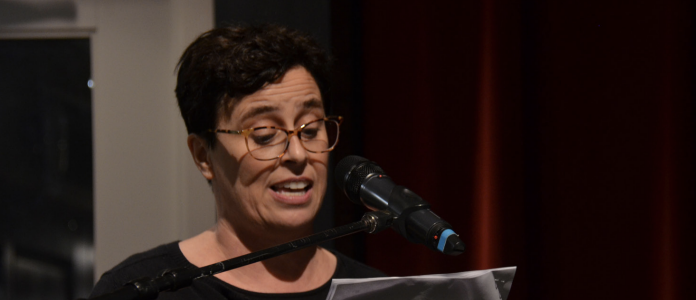
Photo by Brigid McCarthy ‘25
I attended Dr. Ewington’s lecture on Russia’s War against Ukraine for my second campus commentary. The lecture began with Dr. Ewington discussing her background and credibility within this field; because of these deep ties and connections to Russia, Ewington makes it clear that it is a true tragedy that Russia is the aggressor in this conflict.
Ewington describes April of 2021 in Ukraine; this is a crucial time as this was when Russian troops began to surround Ukraine fully. Despite this direct threat surrounding Ukraine’s borders, Ukraine called Russia’s bluff as they felt the repercussions Russia would face were too serious for war to ensue. They were wrong. Ewington speculates that Ukraine failed to take into account the president of Russia, Vladimir Putin’s obsession with the historical narrative that Ukraine is simply part of Russia. This newly introduced topic of Putin’s historical obsession leads Ewington to her main theme: the importance of the historical narrative regarding this major conflict.
As Ewington further addresses this argument, she points out Putin’s use of cynical lies and outlandish historical claims that simplify and distort Ukraine’s history. Ewington then reveals a groundbreaking point that significantly furthered my understanding of this current conflict: Putin considers himself a historian. Through his “historic” lens, Putin insists that both citizens from Russia and Ukraine are one people, which Ewington illustrates by directly quoting a statement from Putin’s published fifteen page-page essay: “I consider Ukrainians and Russians to be one people.” The essay from which this statement comes is devoted to demonstrating what Putin describes as the historical unity between Ukraine and Russia, even referring to Ukraine’s capital Kyiv as the mother of Russia. He then goes on to further his point that Ukraine is a part of Russia. It always has been and must continue to be. After Ewington analyzes Putin’s essay, she then presents his philosophy that a war would re-establish Russian unity explaining the obvious danger that derives from this ideal. Continuous examples of Ukrainian degradation are then shown. These examples include statements referring to Ukrainians as only little brothers and that their dialect is only a fake peasant version of the Russian dialect.
Ewingtons main point is that Putin is clearly trying to use Russia’s historical narrative to justify the war with Ukraine. With Putin constantly pushing the narrative that Ukraine is a part of Russia and everything they do is inferior to Russia, he is, as Ewington describes setting up for the extinction of Ukraine. Once stated this way, Putin’s previous statements regarding Ukraine and Russia’s relationship with Ukraine become much more sinister. Especially when directly following this statement, Ewington explains the skill with which Putin’s regime has to silence protestors. Ewington then reveals the generational divide between older and younger citizens regarding the war; it is clear that a new age of Russia is emerging. Still, every precaution is being taken to silence this new age as much as possible.
Overall, Ewingtons argument throughout this lecture is clear do not overlook the historical narrative and tactics Putin is using to justify this conflict. This war is an attempt to destroy a nation, people, and a profoundly cultured society. Through Ewingtons evidence presented during the lecture, I gained a much deeper understanding of the historical relationship between Russia and Ukraine and how that still deeply impacts the political climate today. In addition this lecture also helped me realize
About: Throughout my time in the Humanities, I have noticed a particular interest in the ways in which the human body is subjected and responds to traumatic events. History, philosophy, literature, psychoanalysis, gender and sexuality studies, and more are all in some way informed by and interested in trauma theory. In this portfolio, I hope to provide a more in-depth analysis of trauma in the Humanities throughout my semester, as well as provide a record of my learnings.
Campus Commentary #3
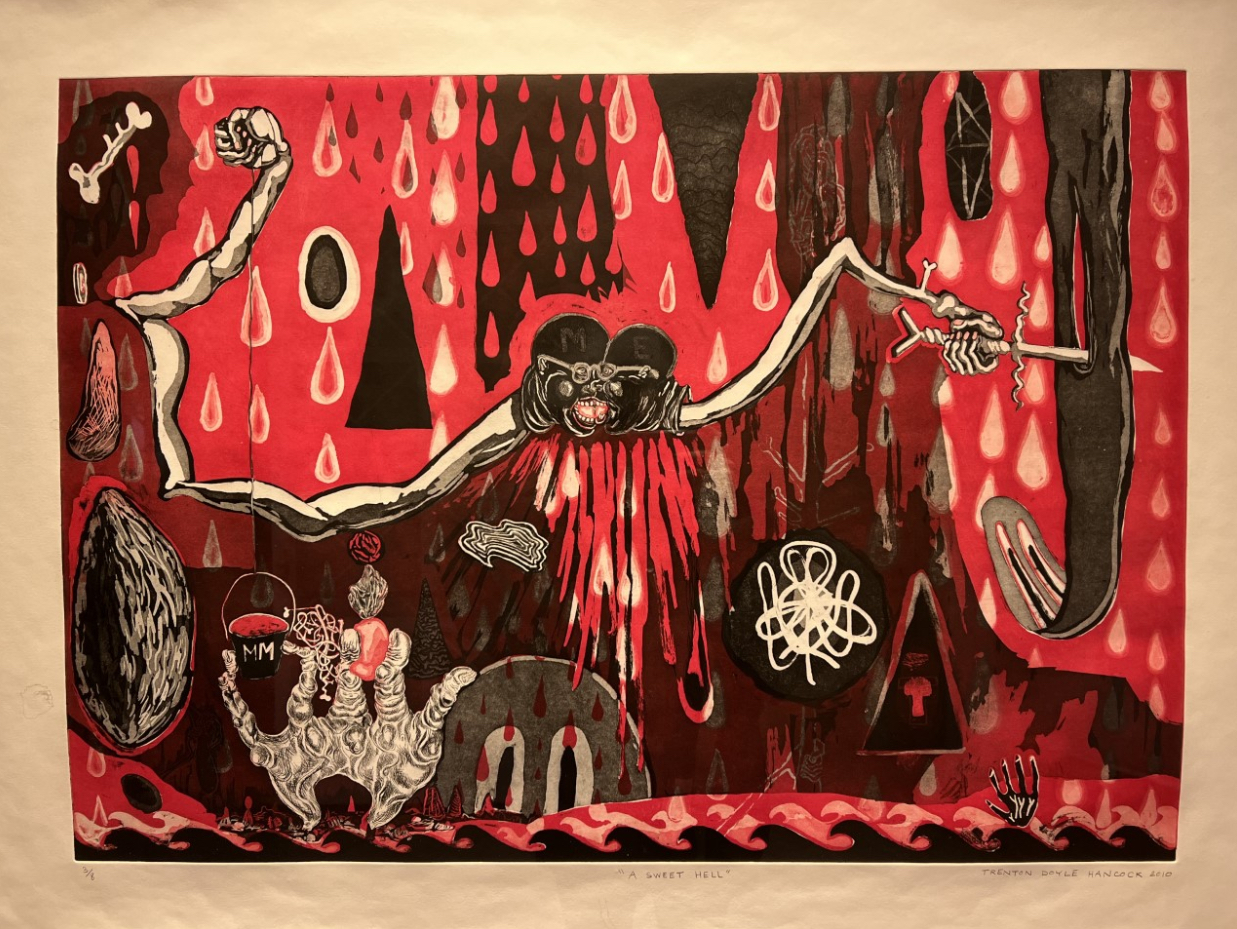
Photo by author
For my final campus commentary of the semester, I chose to write about the piece of art shown above. The following piece of art is currently sitting in the Visual Arts Center here at Davidson. It was illustrated by Trenton Doyle Hancock in 2010. For almost twenty years, Hancock has been constructing narratives that continue to enhance Hanocks artistic work. One thing I found interesting when researching Hancock is that he claims that all of his work is fictional and autobiographical. Regarding the image above, I can clearly see how this art could embody Hanocks fictional realm. Still, I want to look deeper into this piece and see how it could be autobiographical.
The first thing I looked at in the image is the two faces that are either communicating or fighting. What’s important to note is the letters on each face’s head; one letter says “M,” and the other says “E,” clearly implying that Hancock sees himself in this image. It is important to note that Hanock is an African-American artist, so the hell he could be portraying in the photo is the discrimination and scrutiny he has had to face throughout his life.
What I always find fascinating about art like this is there aren’t any instructions on interpreting or eternalizing it. Another interpretation I formed while analyzing this piece is it could be portraying the subconscious we all have but want to hide. In the image, you see the two faces smiling, but behind their backs, it seems they are fighting off these shapes that don’t have an identifiable body. Hancock could be implying that we all have our own battles that none of us can see, and from what it looks like, Hanocks battle looks like it’s against himself.
After analyzing the image, I concluded that Hancock is portraying the evil battles we all face, whether it be against ourselves or the rest of the world we all have fights and battles going on behind our backs, so maybe this image is demanding a little more kindness from everybody to help each other with the fights we don’t know about.
The last thing I want to talk about regarding this piece is the title, which is “A Sweet Hell.” I find it interesting that hell follows the word sweet as we usually associate sweet with pleasant pleasurable things so why did Hancock choose to title this “A Sweet Hell” and not just “A Hell?” I think the potential solution to this unanswered question could be that in the darkest times, we find the people around us who genuinely want us to succeed. In other words, though this picture may represent a hell, the resiliency and kindness that can come from such a hell are what make it sweet. In these times of darkness, we will triumph; with that, the human condition remains.
Campus Commentary #4
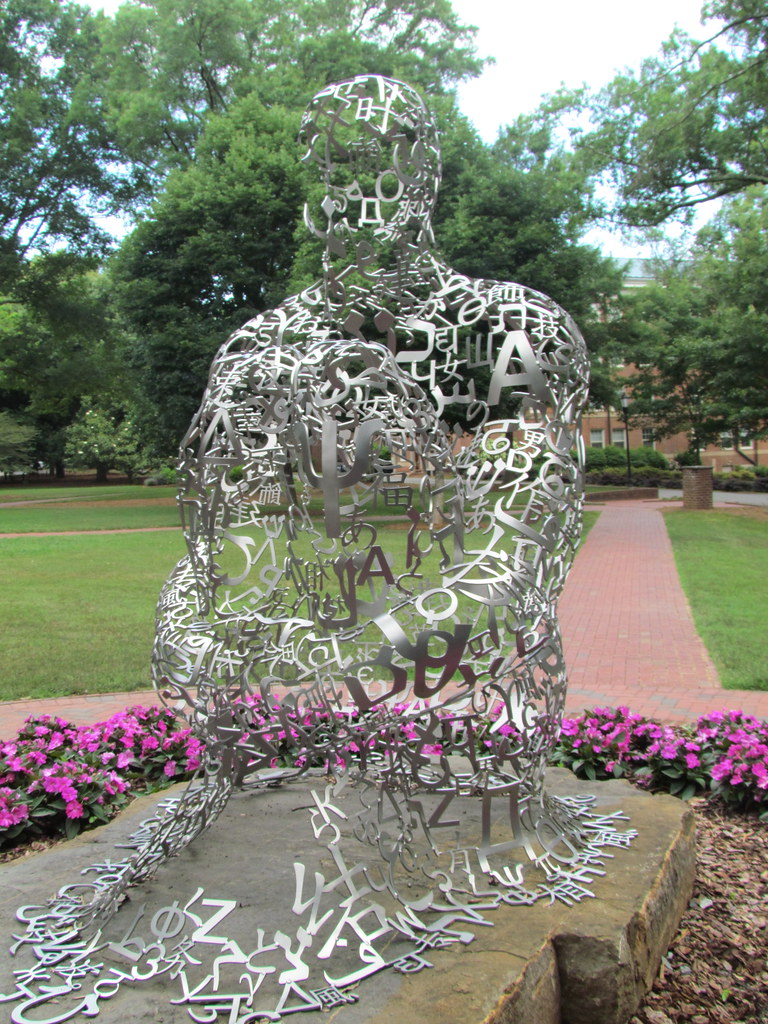
When thinking about a topic for my first campus commentary I wanted to write about something on campus that I see everyday but have never really appreciated. This led me to choose an art piece that is in the heart of campus and that I walk by everyday, Jaume Plensa’s Waves III. Jaume Plensa is an artist from Barcelona. Throughout his time as an artist he has constructed sculptures for public spaces all around the world using light, sound, and a variety of metals in hopes of inspiring others to dream. The piece I am writing about happens to be constructed of cast iron.
When observing this art piece in depth for the first time, one of the aspects of the piece that specifically caught my attention was its location. When I wrote about art for a campus commentary last semester I had to go to the Visual Arts Center to find the piece I wanted to talk about. However, this semester I hardly had to leave my dorm. This made me wonder what is the difference in a piece of art when it is in a gallery versus in a public setting? My initial response to this question is that in an art gallery you expect to see art, but on your way to class or around campus you don’t expect it as much. Right off the bat, this can alter one’s perception of an art piece. When asked about this, Plensa said that when constructing art for a public place you can never do anything right. In other words in a public space it is open to so much more criticism mainly because of the amount of people that encounter the art. I found this to be very interesting and inspiring; that even though Plensa knows there will be critics that might not enjoy his work as much as others, he still wants to put his art where everyone can see it because he thinks that everyone can get something out of his art. This is exemplified in Waves III by the five different paths that all lead directly to the sculpture making it a place where people are meant to gather and observe this piece. This leads me to believe that a piece of art displayed in a public place should be able to be interpreted by everyone and is designed to draw people in and encourage introspection when otherwise we would just carry on with our day.
In addition to the unconventional location of the piece, I was also taken by the fact that the sculpture was completely composed of cast iron letters all from different languages. In this piece Plensa uses characters from eight different languages including Hebrew, Arabic, Greek, Russian, Japanese, Chinese, Hindi, and Latin. All these letters hint at the idea of collaboration which I think is really the theme of the piece. By using cast iron letters from languages all over the world I think Plensa is effectively and creatively portraying this theme. I really enjoyed the fact that Plensa only used individual letters and not complete words, showing that their only way to properly function is to work together with other letters, which symbolizes the importance of collaboration, and its role in the human condition.
What I appreciated most about this piece was the way in which it celebrated all of humanity. The sculpture doesn’t have a face and there is a hole where the heart should be, which gives this piece of art a sense of ambiguity so that anyone might envision themselves as this being formed by diverse knowledge. I feel that Waves III celebrates diversity, knowledge, and the power of collaboration in beautiful and unique ways I have never seen before. This piece has inspired me to think about other art pieces around campus, and about what it really means to be a human being.
Campus Commentary #5

On Friday, March 24, one of the fraternities on campus hosted ‘Woodstock’ which featured three student-led bands. My band, DVL, got to perform a two hour set, which was a truly special experience for me as it was my first time performing with them. The event was based off of the 1969 Woodstock festival which served as a kind of escape into music during the uncertainty of the Vietnam war and civil unrest. The event emphasized the idea of peace and unity, and overall was a break from the tougher aspects of reality. Though the performance held on campus wasn’t relieving us from anything as intense as a war, it was an event that brought together a diverse group of students in a fun and relaxing way.
One of my favorite aspects of the event ended up being the preparation that it required. When my band and I found out that we’d be playing we had to come up with a two hour set. Though I am in bigger bands associated with the school, the rehearsals leading up to Woodstock were so different from any rehearsals I had been a part of prior to preparing for this event. Typically when I practice with a big band that’s associated with Davidson, the entire time is devoted strictly to music. Though this helps me improve my playing much more quickly and I’m able to learn different aspects of the music I’m playing, I still think that crucial aspect of connection is missing. Despite my natural love for music, two hour rehearsals can feel pretty demanding at times, but being able to rehearse in a more organic environment with kids that I would never otherwise hang out with was refreshing. I feel that in the past I have limited myself by avoiding student bands for fear that I wouldn’t get along with the band or that I’d only play the music and nothing else, similar to how I am in larger band rehearsals. However, putting myself out there and joining a student led band really opened my eyes to other aspects of music besides the music itself. The sense of connection I have with my new band was very evident during our performance. The event was able to gather students despite their different ages and backgrounds and we all just enjoyed music. That fact alone made the preparation meaningful and worthwhile.
In addition to thinking about the music we were going to play, we also had to think about what we would wear. Because Woodstock was over 50 years ago it was a blast being able to look back in time and get an idea of what people wore and more importantly what people felt represented connection and unity through fashion. These features included long let down hair, bright colors, flowers, and really light comfortable clothing to just let yourself be free. Putting together an outfit that I felt represented unity and peace while being able to put my own modern spin on it was another aspect of the performance that I absolutely loved. I settled for colorful joggers with all my favorite colors along with a baggy vintage t-shirt that had a sun and a rainbow on it. I felt this explosion of colors would help emphasize the aspect of individuality and creativity while also hinting at nature which was a large part of the Woodstock fashion.
Overall I felt this performance was an amazing experience and an excellent break from the rigorous academic life of Davidson college. Being able to practice music that I love with my new friends after a long day made me feel like I had a purpose and a place to do what I love. This performance has really confirmed my love for the performing arts and I’m excited to continue to play at events like this with my band.
Campus Commentary #6
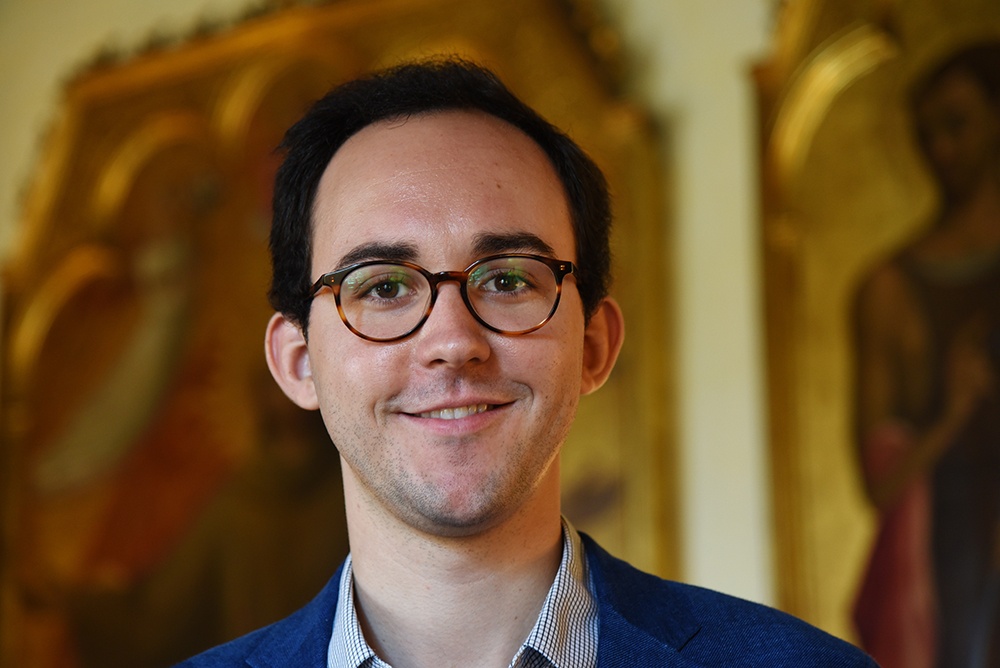
For my final campus commentary I decided to attend Dr. Hudson’s lecture titled “Fictions of Consent and the Origins of the Carceral State in America.” Initially I couldn’t believe how many fellow Davidson students attended the talk. In fact I had to sit on the floor as there were no seats available. Hudson began the lecture by asking a question made by a philosopher we have briefly discussed throughout the course of the year, Michel Fouchault. The question was “How were people made to accept the power to punish, or quite simply, when punished, to tolerate being so?” This question set up the rest of Dr. Hudson’s lecture as the history and evidence he provided all served to answer this question.
Carceral colonialism addresses the way in which colonial powers use the criminal justice system to control and further oppress indigenous people. An example of carceral colonialism Dr. Hudson provided was the foundation of praying towns in New England. The first praying town was started in 1651 near Boston. The town consisted of 29 families (145 people), and was designed to give indigenous people the opportunity to live in a civilized way and pursue the “ideal” Christian lifestyle. To relate these towns to the question Dr. Hudson presented at the beginning of the lecture, it’s vital to understand what the fiction of consent is. Hudson explains the fiction of consent as the very notion that enables the operation of carceral colonialism. He notes that the indigenous people came to these civilizations willingly, but this willingness to come inhabit these towns was based on a lie or, as Dr. Hudson put it, “an act of imagining.” What I find to be fascinating about this “act of imagining” is the fashion in which it goes both ways. In this scenario the indigenous people willingly went to these towns based on a false premise of consent not expecting their culture and agency to be completely stripped from them. On the other side, Europenans supported this cause based on the false premise of consent that these indigenous people were willingly staying in these towns and were better for it. The indigenous people were told that all the suffering, and labor they were enduring was what proved their dedication to Christianity, that the pain they endured was due to God’s anger. Dr. Hudson argued that this acceptance of the power to punish came from this fictional premise of consent, and that this fantastical notion of what was actually occurring in these praying towns was a two way stream.
Dr. Hudson then took this concept of the fictional premise of consent and applied it to our modern day lives. Hudson uses the modern day prison system or more specifically the labels that come out of this system to illustrate his point. He criticizes the fact that once an individual enters the prison system and is labeled a criminal, they are stuck with that label for the rest of their life. This label makes it difficult for them to carry out a regular life once their sentence is served as finding employment becomes significantly more difficult, potentially further propelling them back into incarceration. After Dr. Hudson’s lecture someone asked how the Davidson honor code would fit into this argument. I found this to be one of the more interesting parts of the lecture as it related to something prevalent in my life. Dr. Hudson stated that we are here willingly but are we still being forced? This made me think about all the things in life that we do and feel like we are free doing but are we really?

