What the Constitution Means to Me Tuesday, September 13, 2022

Throughout high school, I can only account for one time we learned about the U.S. constitution. This was in my 10th Grade AP U.S. History class. It was a brief overview, and we were only to Annotate and discuss specific Amendments from The Constitution. These discussions involved more neutral and agreeable amendments. For example, my group discussed Amendment 9 as well, and we debated what rights should still be required to be on the Constitution that is not, and the difference we feel between a right being on the Constitution and one that is to be assumed. Besides discussing my views on the Constitution based on a week of learning it, I have not encountered the Constitution or Bill of Rights much during my high school career. I did expect more specifications in certain Amendments that require government action.
After watching What the Constitution Means to Me, I wondered why Schreck decided to have a seemingly modest set with only pictures of random older men. After an explanation, it was revealed to me that she was actually in the American Legion hall in 1987, surrounded by men who served the Constitution. After some speculation, I decided that Schreck here is trying to reveal the patterns of the past. These pictures of people from the same race, gender, and age range, support Schreck’s opinions on repetitive mistakes not being fixed and something described by Rosdely Ciprian as the illusion of progress. In reference to Schrek’s outfit, it seems she begins the show wearing a bright, possibly fun outfit. I interpreted this as a reference to Schrek’s youth and ignorance, how she was just a young girl who was far too polite. By the end of the show, it seems her outfit has dulled as she discovers the truths of the foundations of the government and society we are ruled by today; the government that has no intentions of protecting us. The play only had three people, but each person played multiple roles. Schreck plays the role of her 15-year-old self and 40-year-old self; Iveson plays a debate moderator and then reveals his truths and backgrounds while also creating a male presence. Lastly, Rosdely Ciprian plays herself, representing the future. Schreck distinguishes her older and younger self quite apparently, even stating when she is playing the part of her current self. The main distinction between the two is the rights they didn’t know they had. When Schreck was 15, she said she loved the Constitution, but as she grew older, she discovered the people and genders excluded from the Constitution and the rights that should be granted to all people. These character changes can correlate with the changes in the Constitution. Character development represents how over time, things change, people change, and so do ideals. It is evident today that revisions must be made to the Constitution as we are currently letting the dead dictate how we live. These revisions must be made to cater to the changes and progress we must collectively embrace as a nation.
Fluxus Thursday, October 6, 2022, 12:10 AM

When looking through the tasks that I could perform, I ultimately decided to perform Dick Higgins Constellation Number 4. This performance requires multiple performers to simultaneously perform percussive attacks on particular objects, explicitly stating that each sound can only be made once. After reading these instructions, I grabbed my roommate, handed him a drumstick, and we “performed.” We both hit random things like the desks, beds, and floor, but over time we began to develop a synchronized rhythm. This only continued for about one minute until we ran out of things to hit and broke a computer mouse. Regardless of the broken mouse and unconventional sounds we made, these instructions forced us to think outside the box and hit things we would never think about hitting, creating sounds we have never made before. This directly connects with Attali’s concept of allowing sounds to be themselves. As a performer, I had no control over what sound would be made when I hit something with a wooden drumstick. I had control over how loud it could be or what object I hit, but I couldn’t manipulate the sound in the way I wanted. Another connection this has with Attali’s passage is his brief concept of where music is supposed to be produced, which is everywhere. Even a messy dorm room with two drumsticks.
When thinking about the future of music, it is quite conflicting. After performing, I wondered if I had just created a truly original piece of music. Attali states that most mainstream music mode is “not the new mode of musical production but the liquidation of the old.” I thought, by this logic, is it even possible not to liquidate the past? Though we had just made “new” sounds, were they new? Even if they are new, we still created these sounds using a pair of drumsticks. This leads me to believe that though the future undoubtedly will hold changes for music, it will always, in a sense, be a “liquidation of the past.
Afro@Digital Thursday, December 1, 2022

Below are the notes I took when watching the film Afro@digital. Overall, Afro@digital is a film/documentary that shows the use and development of technology within Africa. Through this film, I further understood the importance of technology now, especially in Africa. We discussed in sections after the film whether or not we thought this film promoted pan-Africanism. Pan-Africanism is a movement that aims to encourage and strengthen bonds of solidarity between all peoples of African ancestry, and we concluded that the movie did. The way this movie promotes the idea of technology in Africa makes you realize that with the development of technology, Africa will become more connected with its own people and the rest of the world. This film only solidified the possibility of a bright advanced future for Africa.

Black Is King Thursday, March 16, 2023
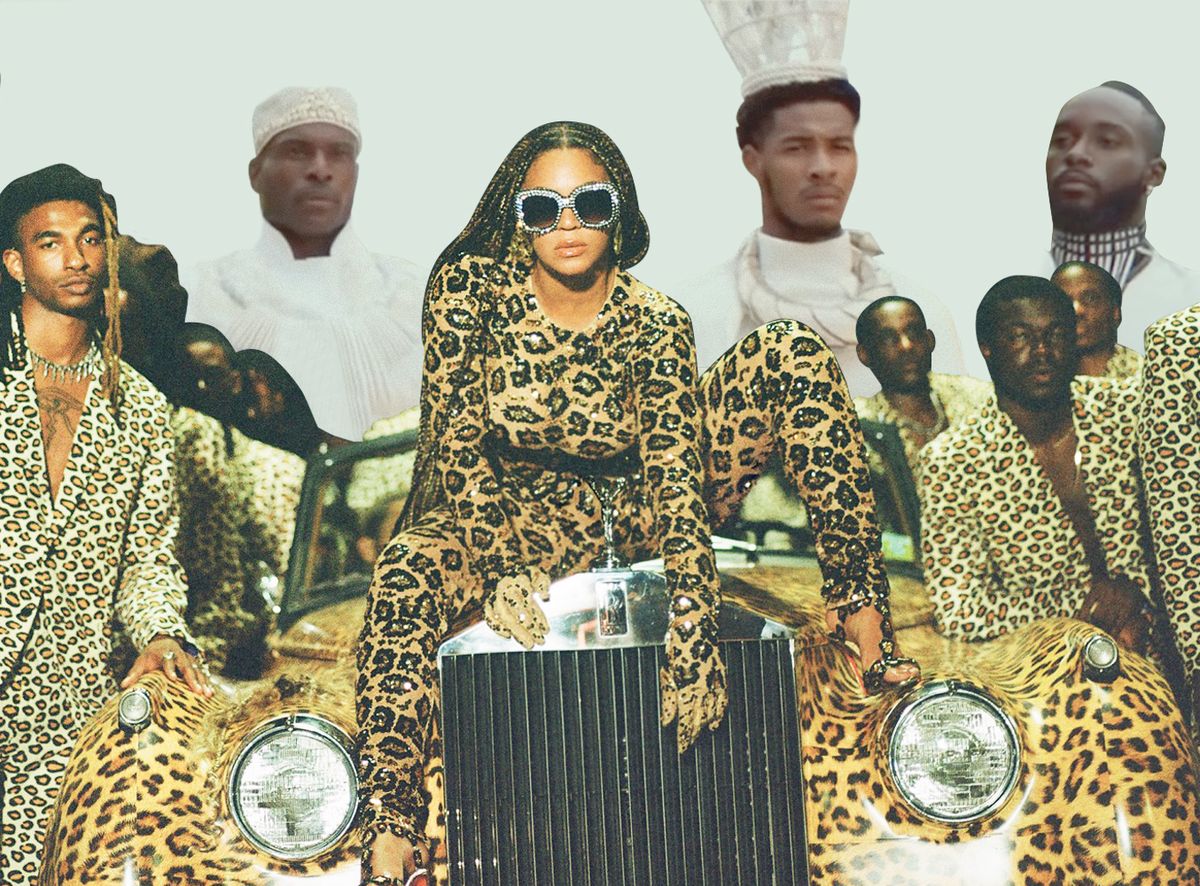
In week 24 we explored the role of Afrofuturism in modern media. We were assigned to watch Beyonce’s Black Is King as it utilizes many of the elements of Afrofuturism. The movie explores ancestral roots and the resistance that ancestors represent. In addition the movie also looks at the way in which ancesteory can be portrayed through natural things such as the ocean. After class discussion, it was argued that this portrayal and attempt to reconnect with ancestral roots could be viewed as problematic. Below is my initial response after watching the movie:
I think that we must be careful when watching Beyoncé’s Black is King because of the way it glorifies and capitalizes on an aspect of African society that doesn’t necessarily represent the majority of it. For example, in the film, a significant amount of wealth and royalty is displayed in a setting of Africa; however, as mentioned in Judicaelle Irakoze‘s article, “African kingdoms were rife with slavery, imperialism, women’s oppression, and class oppression.” Not everybody was royalty, and in fact many were actually oppressed by royalty. In addition, another thing we must be careful about is the context in which we watch this film. In other words though Beyoncé deserves to be recognized for wanting to reconnect with Pan-African roots, the way in which she did it put millions of dollars in a large corporation’s (Disney’s) pocket.
This was my response directly after watching the film, and I don’t feel my opinion on the movie has changed at all, especially after class discussion. A specific notion that I took from class discussion and didn’t mention in my post is the way in which Beyoncé is actually glorifying a monarchy. In my post I address her romanticization of African royalty as exclusive but after discussing the way in which Beyoncé is celebrating figures that were most likely oppressors it’s important to understand that this attempt of reconnection could be viewed as dehumanizing.
Although there are certainly things to be aware of, it’s still important to recognize that regardless of the capitalistic devices being utilized throughout the film, Beyoncé’s Black is King teaches us the importance of ancestral roots. In other words Black is King portrays the importance and prevalence of ancestral heritage through the lenses of earth, and water. Additionally, the film pays homage to Afrofuturism and displays how it is not only limited to the constraints of science-fiction and technology but also, as the reading “The role of Afrofuturism in Beyoncé’s Black is King” points out, Afrofuturism can serve as a place where identity is found for women.
The ambivalence of Saidiya Hartman Tuesday, January 31, 2023
In unit 4 we discussed the notion of critical fabulation. This term was coined by Saidiya Hartman and it refers to a mode of writing that incorporates fiction and fantasy while also accounting for real history. Below are my responses to questions about Hartman’s “The Dead Book” and her article “Venus in Two Acts.” Both of these pieces exemplify how critical fabulation can change the narrative and perspective of a story in a positive way that can restore one’s humanity.
Question one asked us to quote a sentence or two from “The Dead Book” where we see Hartman making the case about her method of extrapolating from a line in an archive or ledger in order to more fully represent the life of an otherwise anonymous person. I first selected the quote: “Watching the girl crawl on hands and knees back to the ship’s hold, the third mate asked the captain if he should help the girl down. The captain cursed her again and said, “She may find her own way.”” (Pg. 139) And the second: “She was no Bridgetown prostitute or Kingston whore, but a chaste girl who died trying to shield herself from the tyrant’s eyes. She had fallen into the hands of a brute, when she needed a protector.” (Pg. 142) I felt that both these quotes from “The Dead Book” exemplify the way in which Hartman intentionally depicts this girl as innocent and alone to tell her story beyond just the violent acts that were committed against her. An important aspect of critical fabulation is its ability to alter a narrative and restore the subject’s humanity which I feel both these quotes accomplish.
We were then asked to quote an excerpt from “Venus in Two Acts” where Hartman makes the opposite case, so I chose the quote: “The girl ‘never will have any existence outside the precarious domicile of words’ that allowed her to be murdered.” (Pg. 9) I felt that contrary to the last two quotes, this quote shows Hartman emphasizing the suffering and injustices the victims endured and how that suffering may be all they are remembered by.
Finally, we were asked to state our own views regarding critical fabulation. When thinking about the material above in relation to critical fabulation, I feel quite torn. On one hand I understand and acknowledge the potential upsides to this form of writing as it gives readers a look into history from a perspective we may have considered but never got to experience or fully understand. On the other hand, I feel this writing could be seen as disrespectful, which Hartman almost acknowledges in “Venus in Two Acts,” and I think her reasoning sums up my concerns perfectly. In essence, these girls have already been used and exploited enough, and writing about their most vulnerable and low moments seems to further embody them as victims cheated out of a life, instead of the countless other things they were and could have been.

